








Guard vs. Handrail: IRC Codes for Residential Safety
In the design and construction of decks and staircases, terminology is critical. While the terms "railing" and "handrail" are often used interchangeably in general conversation, the International Residential Code (IRC) distinguishes clearly between the two.
For contractors, architects, and homeowners, understanding this distinction is not merely a matter of semantics; it is a matter of code compliance and liability. A "Guard" and a "Handrail" serve distinct safety functions, operate under different height regulations, and must meet specific structural standards.
At Deck and Rail Supply, we specialize in providing railing systems that are not only aesthetically pleasing but fully engineered to meet these rigorous code requirements. This article outlines the technical differences between guards and handrails according to the IRC, and how to select products that ensure a compliant installation.


1. The Guard (Commonly: "Railing")
Code Reference: IRC Section R312
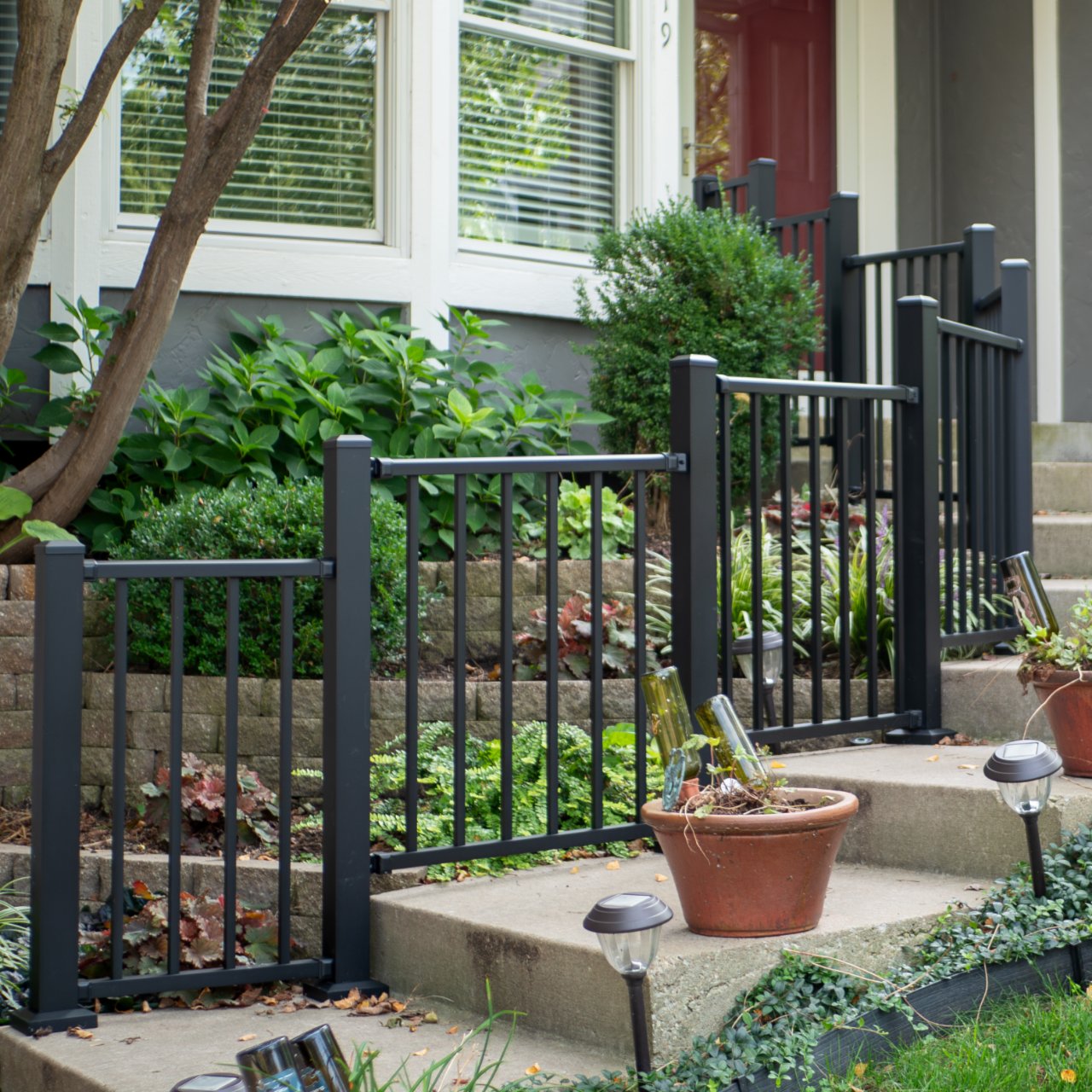
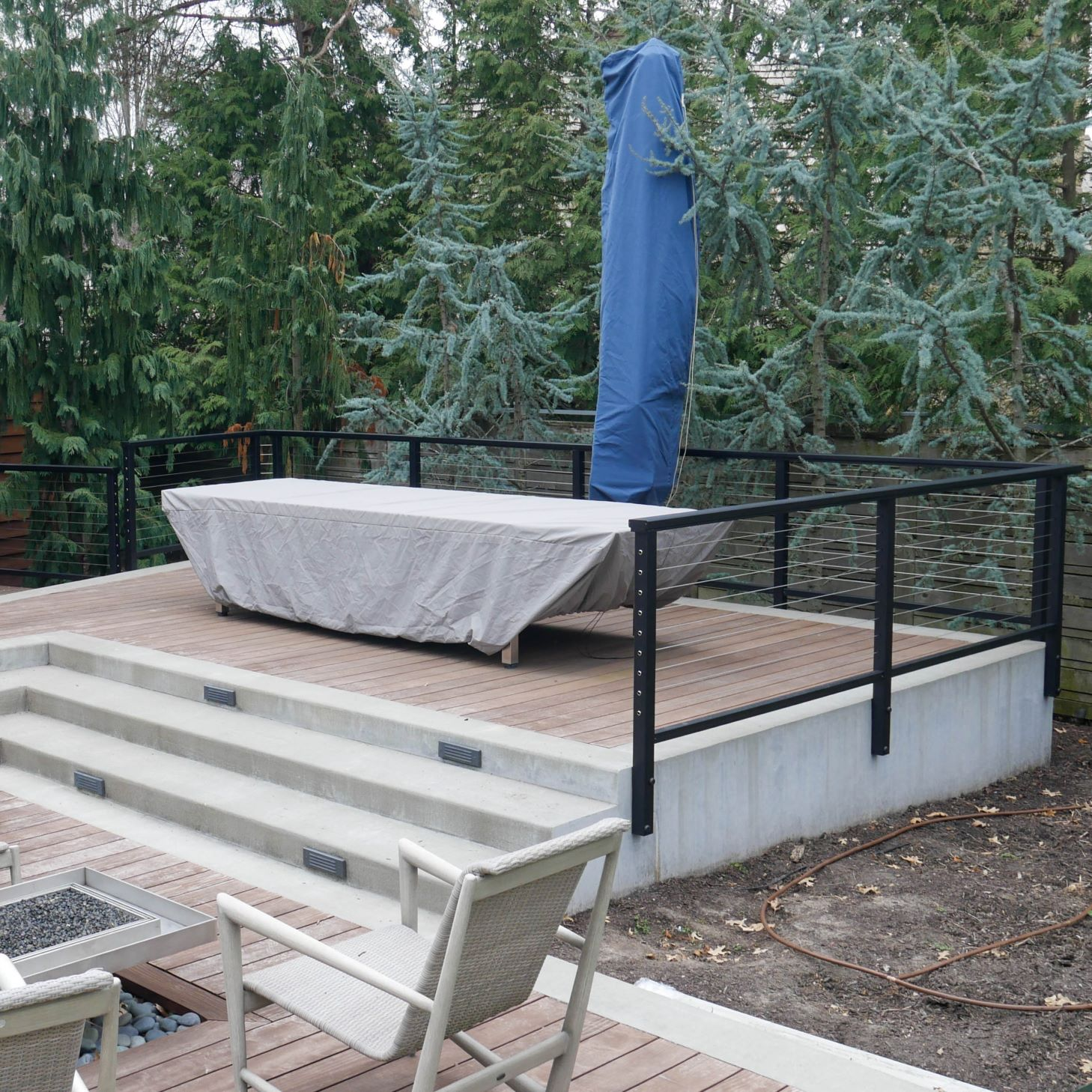
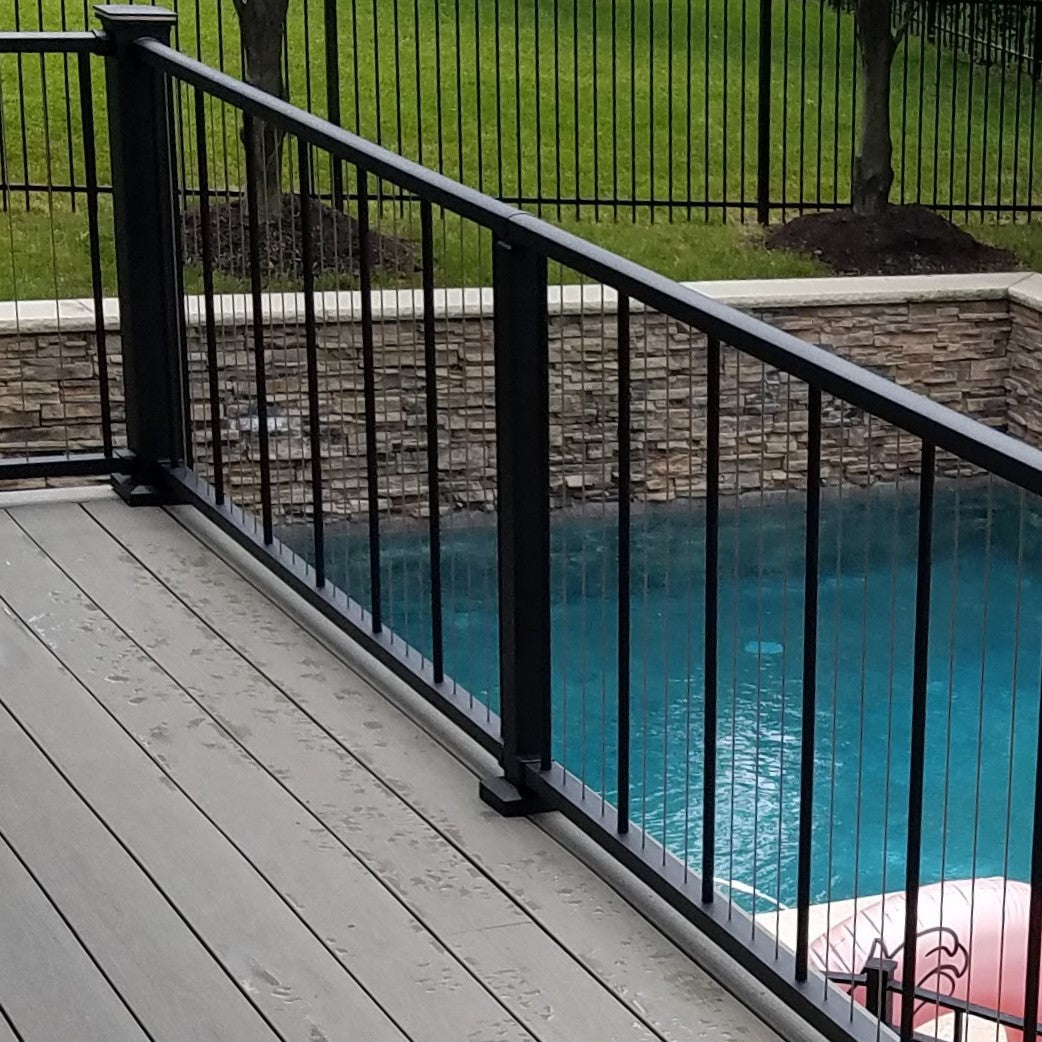
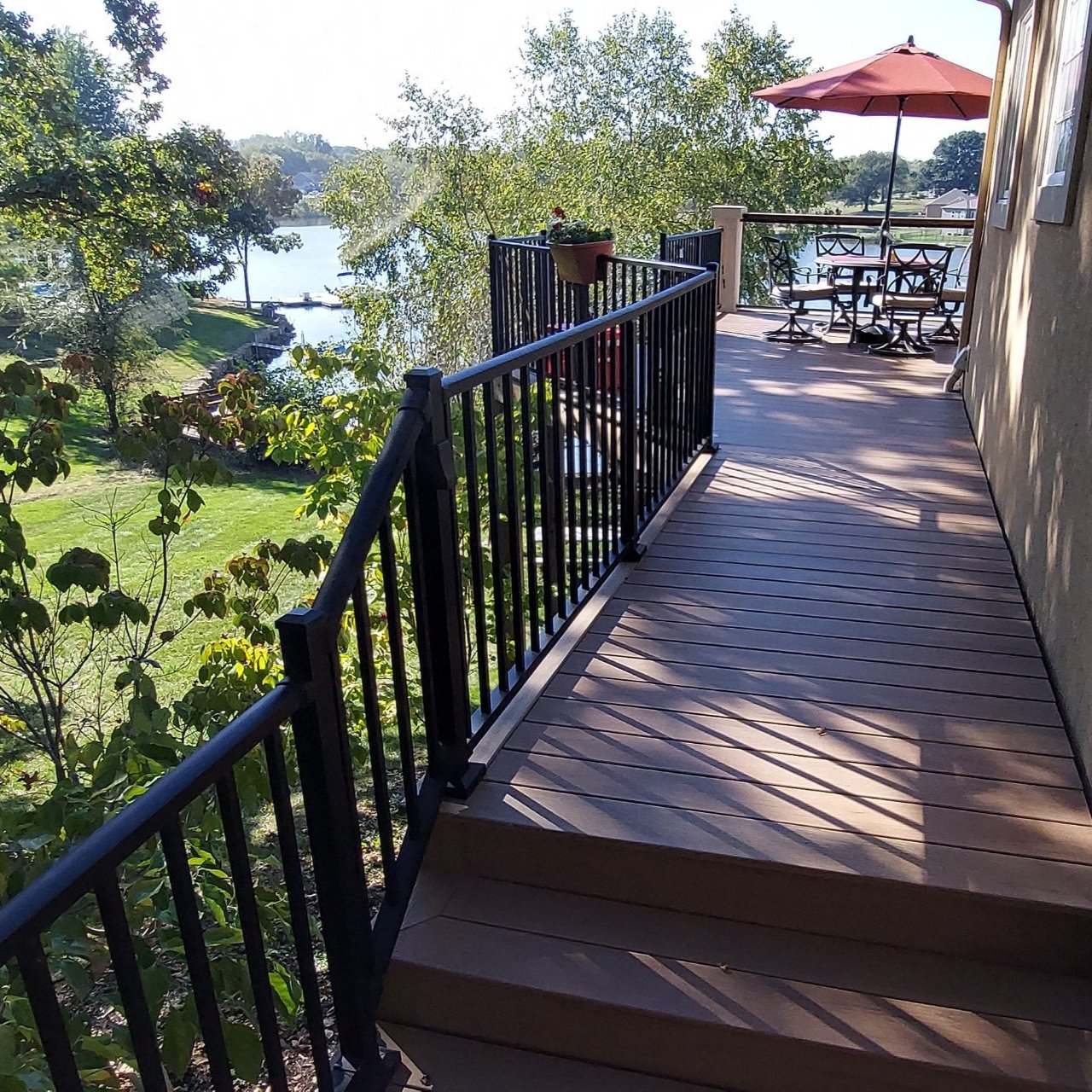
In technical building terms, what is commonly referred to as a "deck railing" is defined as a Guard. The primary function of a guard is fall prevention. It is a vertical barrier intended to prevent falls from elevated walking surfaces.
- When is it required? (R312.1.1): A guard is required along open-sided walking surfaces (including decks, porches, and landings) located more than 30 inches (762 mm) vertically to the floor or grade below.
- Height Requirement (R312.1.2): For residential applications, guards must be a minimum of 36 inches (914 mm) high.
Structural Load (Table R301.5): To ensure safety, guards must be engineered to withstand a 200-pound concentrated load applied at any point along the top rail.
2. The Handrail
Code Reference: IRC Section R311
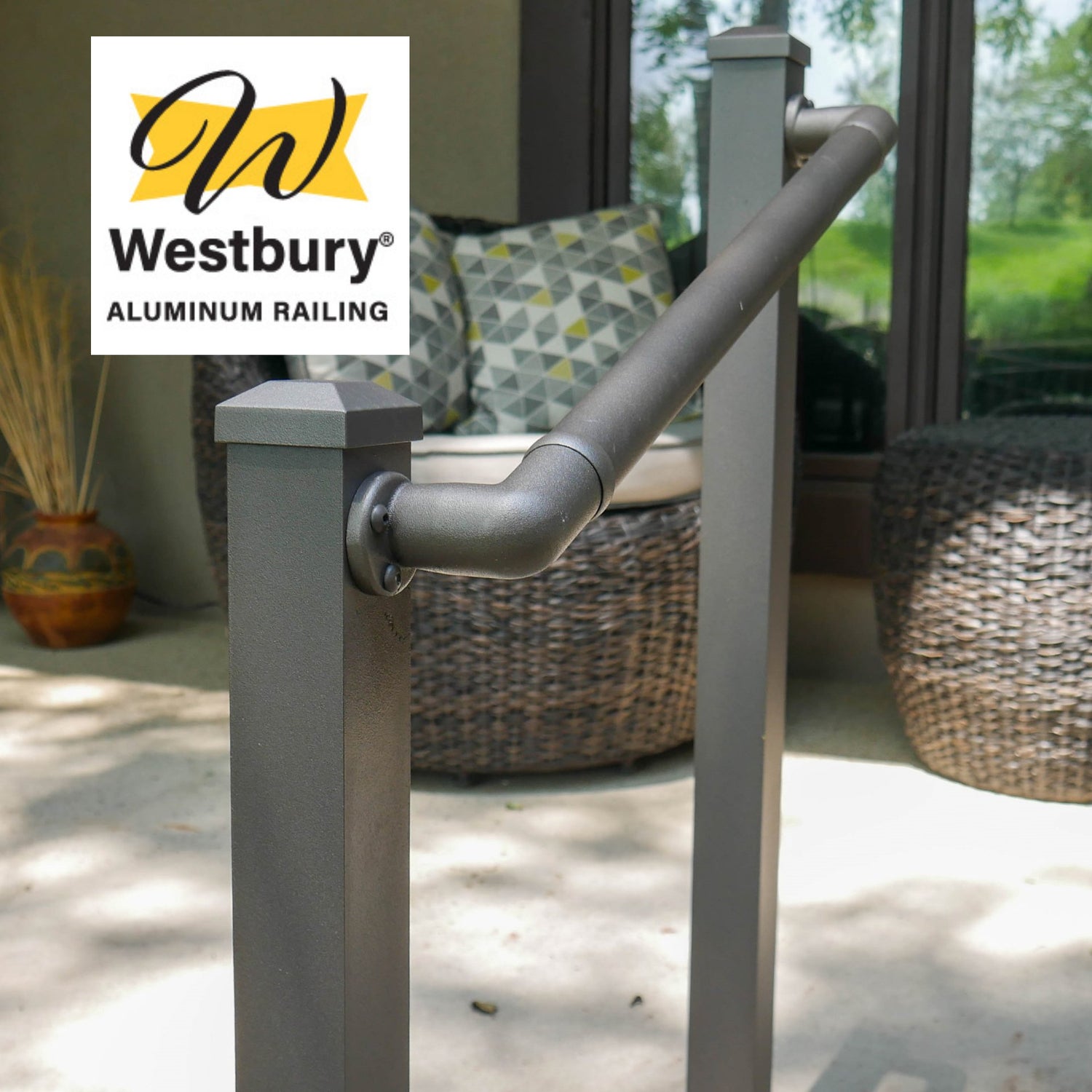
A Handrail serves a different purpose: guidance and support. It is designed to be grasped by the hand to provide stability while ascending or descending stairs. Unlike a guard, which acts as a barrier, a handrail is an ergonomic support tool.
- When is it required? (R311.7.8): A handrail is required on not less than one side of any flight of stairs with 4 or more risers.
- Height Requirement (R311.7.8.1): Handrails must be installed between 34 inches and 38 inches (864 mm to 965 mm) measured vertically from the stair nosing.
- Graspability (R311.7.8.5): This is a frequent point of inspection failure. The IRC mandates that handrails possess a specific cross-section (Type I or Type II) that allows for a secure grip. A flat, wide decking plank generally does not meet the graspability requirement.


The Compliance Challenge: Stairway Railings
The intersection of these two codes occurs on open-sided stairways. In this application, the system must perform two functions simultaneously:
- Act as a Guard: Preventing falls off the side of the stair.
- Act as a Handrail: Providing a graspable support for the user.
To achieve this without installing a secondary pipe rail, the top rail of the system must satisfy the requirements of both R311 and R312. This means it must be structurally strong enough to be a guard, but the profile must be "graspable" to serve as a handrail, and it must be installed within the 34"–38" height range.
The Deck and Rail Supply Solution
We offer engineered railing systems designed specifically to resolve this conflict.
- Graspable Top Rails: Our stair railing profiles are designed to meet IRC Type I graspability requirements, eliminating the need for auxiliary handrails.
- Continuous Crossover Posts: IRC R311.7.8.4 requires handrails to be continuous for the full length of the flight. Our crossover post configuration allows the top rail to run continuously over the post, ensuring code compliance and uninterrupted support.

Aesthetics & Integration: The "Collection" Approach
A common concern for homeowners is that adding a code-compliant handrail will ruin the look of their deck. This often happens when builders use mismatched, generic pipe rails from a hardware store.
At Deck and Rail Supply, we view the handrail as an integral part of the design. The brands we carry (such as Westbury, DekPro, and KeyLink) design their handrails as part of a unified Collection.
- Color Matching: Our handrails are manufactured with the exact same powder-coating process as our guards, ensuring a perfect match in color, texture, and sheen.
- Profile Compatibility: Whether you need a secondary handrail (CHR) or a graspable top rail, the components are designed to attach seamlessly to the posts and brackets of that specific brand.
You do not have to sacrifice aesthetics for safety. By selecting a handrail from the same collection as your guard, you achieve a cohesive, high-end finish.
Guard Rail Kits


Feeney Modern (LR) DesignRail Level Rail Kit


Feeney Modern (SR) DesignRail 36 in. Stair Rail Kit
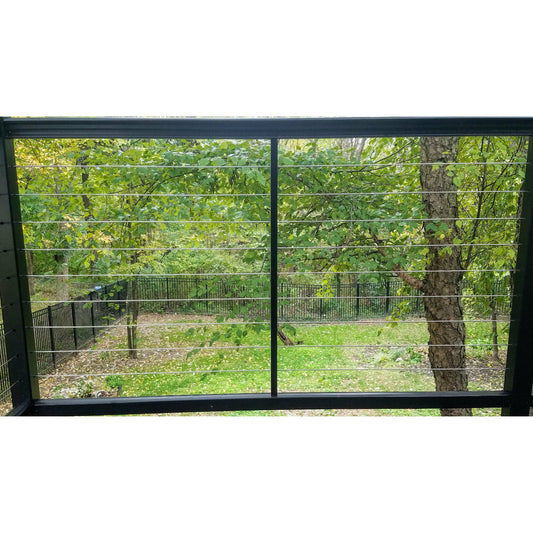
Feeney Classic (LR) Level Rail Series 150
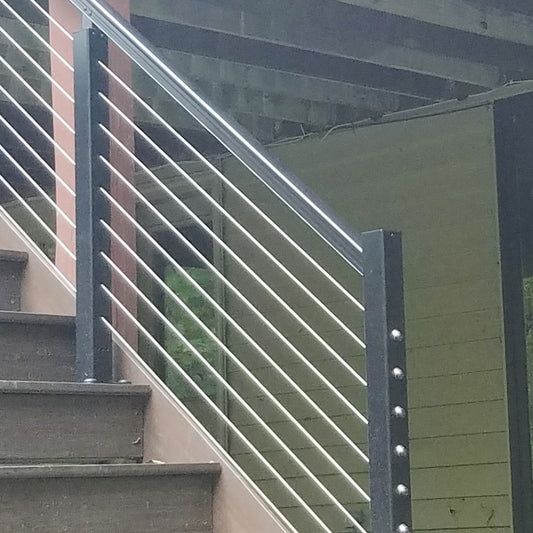
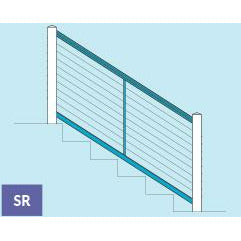
Feeney Classic SR Stair Rail Kit Series 150


KeyLink American Vertical 36 in. (Silver) Cable Rail Kit


KeyLink American Vertical 36 in. (Black) Cable Rail Kit


KeyLink Chesapeake 36 in. Vertical (Silver) Cable Rail Kit


KeyLink Chesapeake 36 in. Vertical (Black) Cable Rail Kit
Commitment to Safety: Why We Sell Rated Products
The structural integrity of a railing system is paramount. While the market offers various "decorative" options, safety devices must be engineered to perform under stress.
At Deck and Rail Supply, we strictly adhere to a policy of selling rated and approved products.
- Load Testing: Our systems are tested to meet or exceed the IRC Table R301.5 requirement of a 200lb concentrated load.
- Code Assurance: We provide products backed by engineering data, ensuring that when properly installed, they will pass inspection and provide reliable safety for the life of the deck.
Frequently Asked Questions (FAQ)
The following information is based on the 2021 International Residential Code (IRC). Local amendments may vary.
What is the technical difference between a Guard and a Handrail?
A Guard (R312) is a protective barrier required on elevated surfaces (over 30" high) to prevent falls. A Handrail (R311) is a support rail required on stairs (4+ risers) to assist with balance.
Do your handrails match the color of your railing systems?
Yes. Unlike generic hardware store rails, the handrails we sell are part of engineered Railing Collections (such as Westbury and DekPro). They are designed to match your guardrail system perfectly in profile, texture, and color.
Is the handrail sold as part of the kit, or separately?
Handrails are typically sold as separate components from the guardrail panels. This allows you to customize the length to your specific staircase. However, because they are part of the same brand collection, they are designed to integrate seamlessly with the posts and brackets of the guard system.
Why are "Crossover Posts" recommended for stairs?
The IRC requires handrails to be continuous. Standard posts break the continuity of the rail, often requiring a secondary handrail to be added for code compliance. Crossover posts allow the graspable top rail to run continuously over the post, satisfying the code requirement in a single system.
Can I use a standard deck rail on my stairs?
Only if the top rail profile meets the "Graspability" requirements of R311.7.8.5. Many standard deck rails are too wide to be legally used as handrails. We offer specific profiles designed to meet this grip standard.